
Atlanta Apartment Move-Out Rules Before Renting a Cargo Van
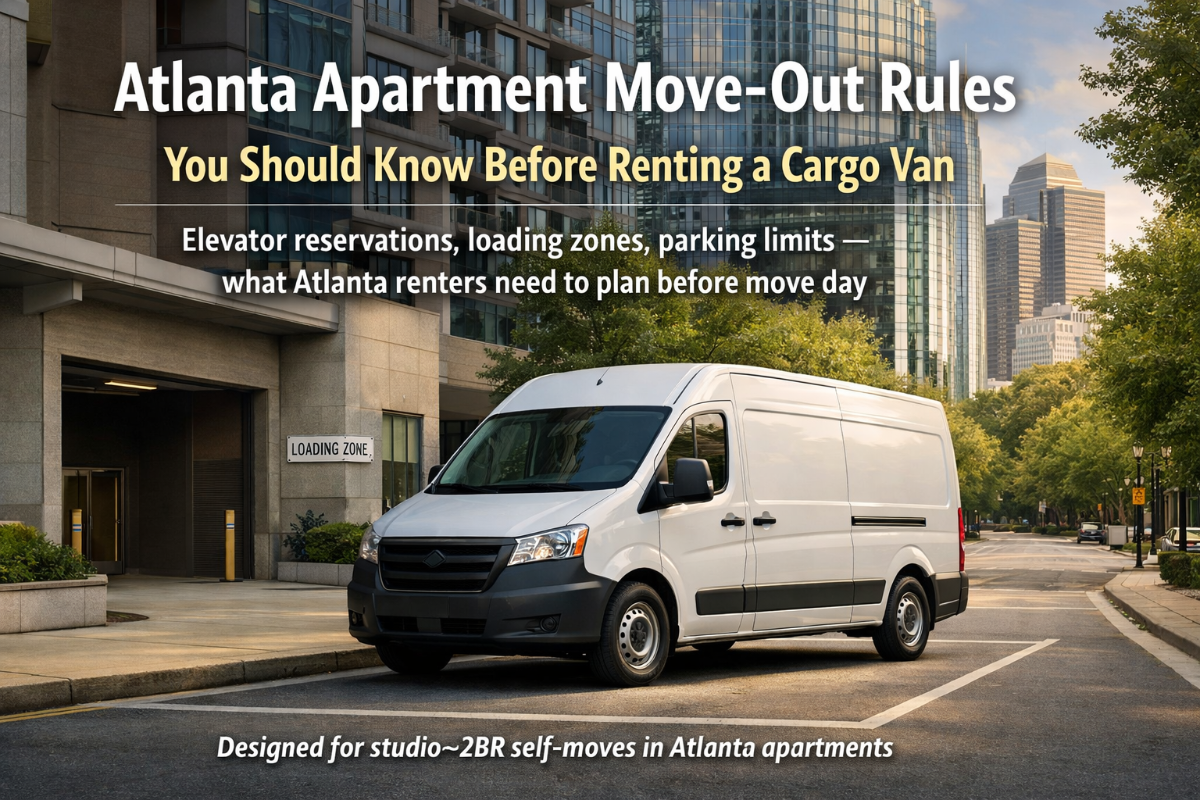
Atlanta Apartment Move-Out Rules Before Renting a Cargo Van
Moving out of an Atlanta apartment isn’t just about packing boxes — it’s about navigating building rules that can quietly derail your move if you’re not prepared.
If you’re moving a studio, 1-bedroom, or small 2-bedroom apartment yourself using a cargo van, this guide walks you through the most common move-out rules Atlanta renters face — and how to avoid fines, delays, or denied access on move day.
These rules apply citywide, with special callouts for high-rise apartments in Midtown and Buckhead, where enforcement tends to be stricter. Rules vary by building, so it’s always smart to confirm details with your leasing office before move day.
1. Elevator Reservation Rules (Almost Always Required)
Most managed apartment buildings in Atlanta require you to reserve a service elevator in advance for move-out day.
Reservation windows are usually 1–2 hours
Some buildings limit one move per time slot
Weekends book up quickly — sometimes 7–14 days ahead
If you show up without a reservation, security or management can deny elevator access, forcing you to reschedule.
Why cargo vans help: One-trip moves fit cleanly into short elevator windows. Multiple trips with a box truck often don’t.
2. Loading Dock Rules & Time Limits
Many Atlanta apartments — especially high-rises — have designated loading zones or docks with strict time limits.
Common limits: 30–60 minutes
Hazard lights are required in some zones
No overnight or unattended parking
Overstaying your window can lead to tickets, towing, or warnings from building staff.
Why cargo vans help: Cargo vans fit standard loading spaces and don’t trigger the same scrutiny as large box trucks.
3. COI & Insurance Requirements (What Actually Applies)
Atlanta apartment buildings sometimes ask for a Certificate of Insurance (COI) — but this usually applies to professional moving companies, not self-moves.
If you’re renting a cargo van and moving yourself:
You are typically not required to provide a COI
You are still responsible for any damage caused
Important: Some buildings mix up the policy. Clarify that you are a resident self-moving, not a hired moving company.
4. Parking Enforcement Is Aggressive in Atlanta
Atlanta parking enforcement does not pause for move day.
Expired meters are still ticketed
No-parking zones are enforced
Tow trucks actively patrol high-density areas
This is especially common in Midtown Atlanta and Buckhead, where parking enforcement tends to be stricter.
Why cargo vans help: Cargo vans can usually park legally in standard street or deck spaces where box trucks cannot.
5. Damage Liability Rules (Walls, Elevators, Floors)
Most apartment leases hold tenants financially responsible for move-out damage — even if it happens in a hallway or elevator outside your unit.
Common charge areas include:
Elevator walls and doors
Hallway corners and paint scuffs
Unit door frames and entryways
Some buildings require:
Protective pads (sometimes provided by management)
Refunds or deposits to be settled after inspection
Why cargo vans help: Smaller loads mean fewer hallway trips and less risk of repeated contact damage.
6. After-Hours Move Restrictions
Many Atlanta apartments restrict move-outs to specific hours, often:
Weekdays: 9am–5pm
Weekends: limited or no evening moves
After-hours moves may require special approval — or may not be allowed at all.
Why cargo vans help: Faster loading means you’re more likely to finish within approved hours.
7. Weekend vs Weekday Differences
Weekend move-outs are popular — and often more regulated.
Fewer elevator slots
Shorter dock windows
Higher staff oversight
Weekday moves often allow:
Longer reservation windows
Less congestion
More flexibility if delays happen
Tip: If you’re aiming for a one-trip cargo van move, weekday mornings are usually the smoothest.
8. HOA vs Corporate Apartment Rules
Atlanta rentals typically fall into two categories:
Corporate-managed apartments — standardized, strict policies
HOA-managed condos — rules vary widely by building
HOAs may require:
Move notifications submitted in advance
Specific elevator padding procedures
Approved move hours and reserved dock access
Always check written rules first — HOA enforcement can be stricter than corporate apartments.
Common Move-Out Mistakes Atlanta Renters Make
Not reserving the elevator early enough
Assuming loading zones are flexible
Choosing a vehicle too large for the building
Planning multiple trips inside a short time window
Most of these issues are avoided by planning a single, efficient cargo van trip.
Final Takeaway: Plan for the Rules, Not Just the Boxes
Atlanta apartment move-out rules aren’t designed to make moving impossible — but they do reward efficiency.
If you’re moving a studio, 1-bedroom, or small 2-bedroom apartment, a cargo van is often the easiest way to:
Stay within elevator reservations
Avoid parking violations
Reduce damage risk
Finish within approved hours
Next step: Review your building’s move-out rules, reserve your elevator slot, then plan your move around a single, well-loaded cargo van trip.
0 comments
Log in to join the conversation.
Be the first to share your thoughts.